
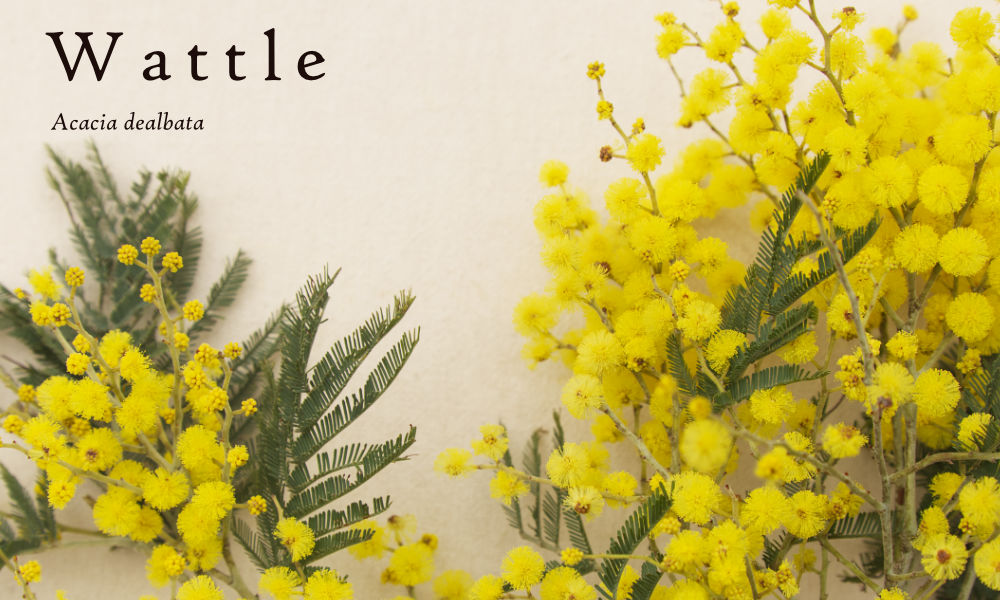
When the Wattle Blooms
Acacia dealbata — Silver Wattle
It’s August and in our corner of Tasmania and the hills and roadsides are ablaze with gold blossoms. The wattle trees are in full bloom, offering great cascading clouds of yellow pom-pom flowers accompanied by the buzz of many happy bees. I love wattle season, not just because of its beauty, but also because it’s one of the most notable signs that spring is on its way. Amidst the excitement of warmer times to come, it’s also a reminder to get prepared for spring planting. When I see those tiny golden suns, I know it’s time to start sowing my tomato and cucumber seeds.
We are fortunate to be surrounded by endless stands of silver wattle, and we have learned over the years to embrace the many offerings of this generous tree. Now, in late winter we gather the flowers. They look lovely in a vase, and in pancakes. In summer, when the pods have dried and split to reveal their shiny black seeds, we harvest those too.
The wattle tree has a long and rich cultural history in Australia.
The Nation's Tree
When in flower, wattle trees are green and gold, Australia's national colours. While it is the golden wattle (Acacia pycnantha) rather than our silver wattle that holds the official title of national floral emblem, the two are closely related and the wattle genus as a whole is deeply woven into Australian identity.
The first use of wattle as a symbol of Australia dates back to 1838 in Hobart, Lutruwita/Tasmania. Australian sporting teams wear green and gold uniforms, inspired by wattle. Wattle branches have been on Australia’s coat of arms since 1911. And at Australian citizenship ceremonies, a sprig or pin of the golden wattle is frequently worn and displayed to symbolise new beginnings, unity, and a fresh start in the community.
More than a thousand species of acacia plants, known as wattle, are found throughout Australia. Aboriginal and Torres Strait Islander peoples know these plants by many names and use them as important seasonal indicators. Certain species flowering or setting seed signal to communities that it is time to hunt specific game, harvest certain plants or to move on to a new area. A sophisticated and intimate reading of Country, developed over millennia.
Wattle has been part of Aboriginal and Torres Strait Islander cultures for tens of thousands of years as food, medicine, tool and seasonal marker. More than 30 species are known to be, or have been, utilised. Wattle seed was traditionally ground and used to make flour and cooked into a type of damper bread. With a hard husk that protects the seed during long periods of dormancy on the ground, wattle seed can survive tough weather conditions and historically was a valuable source of protein and carbohydrate in times of drought. The gum, bark, roots and the smoke of some species were also used for bush medicine.
The Pioneer Tree
Silver wattle is what ecologists call a pioneer species - one of the first trees to colonise disturbed or degraded land. Wattles are the first to germinate after a disturbance event, providing cover and protection for other species and creating a microclimate that allows other species to survive. They are a fast growing but short lived tree, typically only growing for 20-40 years. Their rapid growth protects bare soil, often preventing erosion, and they fix nitrogen that creates nutrients for other plants, restoring fertility to the soil. They provide this service so other slower growing species can establish themselves.
In permaculture and regenerative land management, wattles are often planted deliberately as the first tree in a food forest or restoration project. Silver wattle is fast growing, acts as a windbreak and is excellent for stabilising slopes. They do their work quickly, enriching the soil, then step aside.
In our surrounding bushland, we see this playing out very obviously. Much of the area around Woodbridge was once logged and if you know where to look you can see where the forest is slowly regenerating itself. There are bands of silver wattle on the forest fringe that are closely followed by eucalypts, mainly blue gum and stringy bark. The wattles are the first to move in, they stabilises the ground, feed the soil, and then make way for the bigger trees to follow. I also notice them growing along country roadsides, trying to do their regenerative thing on the barren soil of highway fringes. And then there are the myriad wattles in home gardens that have been given the spotlight for their beautiful flower show, and rightly so.
Do you have any wattles growing near you? The first day of September is National Wattle Day, formally recognised in Australia since 1992. A good reason, if you needed one, to go outside and find the wattles growing around you.
Silver Wattle in the Kitchen
The flowers, seeds and gum of silver wattle are all edible. The flowers are rich in pollen and are often used in fritters. They can be scattered through salads, stirred into batters and pressed into honey. They have a faint, sweet, slightly earthy flavour that pairs well with other foraged ingredients.
In summer silver wattle produces masses of hard black edible seed that have a very agreeable flavour that is like a mix of coffee, chocolate and hazelnut. We roast and grind them for a coffee substitute and add them to baked goods. Wattle seed flour has recently gained popularity in contemporary culinary settings due to its high nutritional content, low glycaemic index and rich flavour profile. Wattle seeds are increasingly finding their way into the kitchens of Australian chefs, being used in ice cream, granola, bread, sauces, chocolate and coffee.
A yellow dye can also be made from the flowers and a green dye from the seed pods.
Wattleseed Cookie Recipe
A simple biscuit infused with the deep, roasted flavour of wattle seed.
Makes approximately 20 cookies
Ingredients:
1 cup plain flour
½ cup rolled oats
⅓ cup brown sugar
2 tbsp roasted and ground wattle
butter, softened
1 tbsp honey
1 tsp vanilla extract
Pinch of salt
Method:
Preheat oven to 170°C and line a baking tray with baking paper.
Cream the butter, sugar and honey together until pale and combined. Add the vanilla and mix through.
Stir in the flour, oats, wattle seed and salt until a soft dough forms. If the dough feels too crumbly, add a teaspoon of cold water and bring it together.
Roll into small balls, place on the prepared tray and flatten slightly with a fork. Leave room between each cookie as they will spread a little.
Bake for 12-15 minutes until golden at the edges. They will firm up as they cool, so resist the urge to overbake.
Allow to cool on the tray for five minutes before transferring to a wire rack.
How to roast and prepare wattle seed:
Spread dry, harvested seeds in a single layer in a heavy based pan over medium heat. Stir constantly, they can burn quickly. Roast for 10-20 minutes until the seeds are fragrant and have deepened in colour, with a warm, coffee-like aroma. Remove from the heat and allow to cool completely before grinding.
Once cooled, grind in a spice grinder, small food processor or a good old fashioned mortar and pestle to a coarse powder. The ground seed will keep in an airtight jar for several months. Unground seeds will keep for at least 12 months.
A Note on Foraging Wattle
Silver wattle (Acacia dealbata) is native to Tasmania and south-eastern Australia and is one of the more straightforward species to identify, with its distinctive silvery-green feathery foliage and small golden pom-pom flowers. However, as with all foraging, a confident identification is essential before consuming any part of any plant.
Not all wattle species are edible, and some require extensive preparation before they are safe to use. If you are new to foraging wattle, consult a reputable bush food guide suited to your geographical area or connect with a local foraging group before harvesting.
References
Acacia dealbata - Edible Plant Database
What is Australia's national flower?- Botanic Gardens of Sydney
Aboriginal Use of Wattles - Australian National Botanic Garden
Edible Acacias – Australian Plants Online
Warndu's Guide to Wattleseed – Warndu Indigenous Foods
What are pioneer species and why are they so useful? – The Forage Field
--------------------
The information in this article is shared for educational and historical interest only and does not constitute medical advice.