
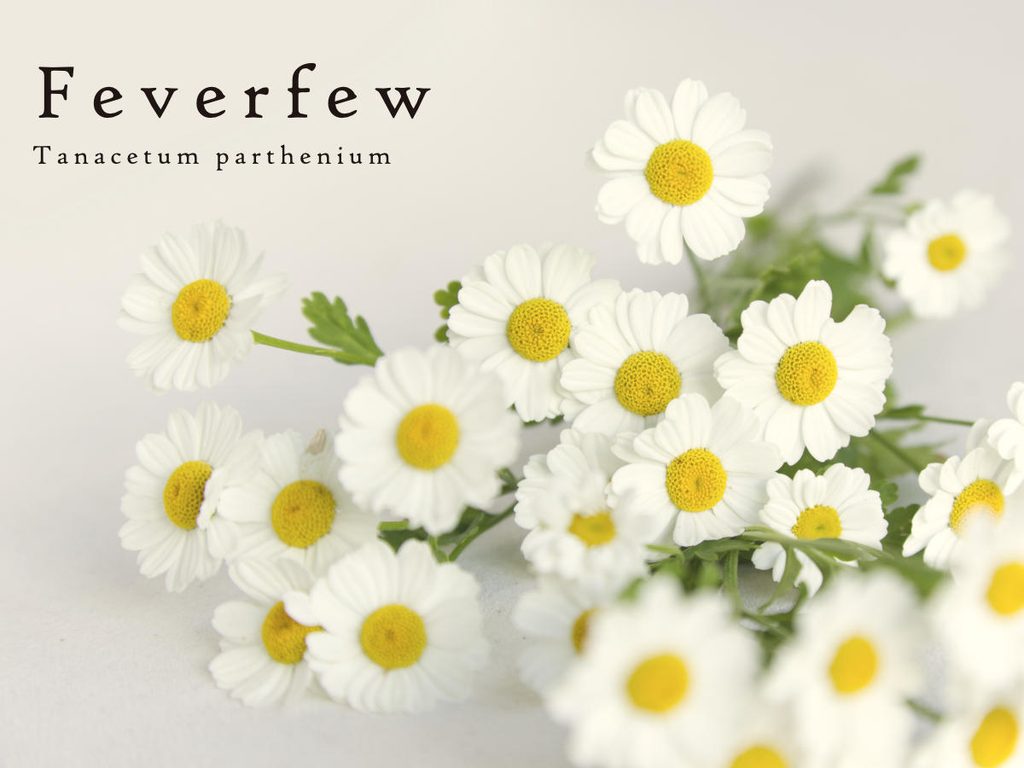
In the old cottage gardens of Europe, feverfew was planted by the doorway, especially during plague years. Local lore said that feverfew flowers by the house would help protect those inside from disease. The pungent scent of feverfew acts as a natural repellent against rats, mice and other pests that were thought to spread the plague. But feverfew's protective abilities go beyond her pretty face and strong floral aroma.
Feverfew's story stretches back further than the cottage gardens of medieval Europe. Records show that Feverfew was used in Ancient Greece and Egypt to ease menstrual cramps, inflammation and general pain. The physician Dioscorides documented her use for inflammation and swelling as early as the first century.
Feverfew has a long history of use in traditional European herbal medicine. Her name comes from the Latin febrifugia, meaning "to put a fever to flight," and for centuries her leaves and flowers have been used to ease fevers, headaches and inflammation, earning her the nickname "medieval aspirin"*. In the modern era, feverfew extract is known for its use in migraine treatments.
Feverfew was also said to cure "elf-shot," a once-common ailment believed to be caused by invisible arrows shot by mischievous elves, resulting in sudden and intense pain. Today this is thought to describe what we might call muscle stitches or arthritis. The spear-shaped leaves of the plant were believed to be a natural sign of her power to cure it.
In astrological herbal traditions, feverfew is considered feminine and is associated with Venus, the planet of love, beauty and emotional equilibrium. This may explain her reputation as a remedy for heart-sickness and the pain of rejection in love. An example of how herbalism is traditionally used to tend to matters of the heart as readily as matters of the body.
All the history aside, she has found a place in our garden. Helping to keep aphids away from the brassicas, occasionally tending to fevers that get too high or linger for too long, and simply because her cheerful flowers look so pretty in a little vase on our countertop.
Do you grow feverfew in your garden, or has she found you another way?
She is charming, hardy and a little untamed. Feverfew will readily self-seed and make her way through your patch if you let her. If you prefer to keep things tidy, simply harvest her pretty flowers before they set seed. But if you love a lush and wild, flower-meadow style garden, this is the girl for you.
* Word of Caution: Feverfew has blood-thinning qualities and should not be used by anyone taking blood thinners or planning surgery. Not recommended during pregancy. Not recommended for children under the age of two. For older children, it should only be used under the supervision of an experienced herbalist.
—————
How to Grow Feverfew
Feverfew is easy to grow and thrives in our Tasmanian climate. She prefers a sunny position with well-drained soil but tolerates a wide range of conditions, including poor soil.
Sow seeds directly in spring or autumn, scattering them lightly over the soil surface as they need light to germinate. Can also be propagated from cuttings or by dividing established plants.
Once settled in, feverfew requires very little care, being drought tolerant once established and rarely troubled by pests or disease. Feverfew self-seeds readily. Deadhead spent flowers to prevent her from spreading more than you'd like, or let her roam if you love a wild, cottage garden feel.
Harvest leaves and flowers in the morning, just as the flowers open, when the medicinal compounds are at their peak. Dry on a rack in a well-ventilated spot away from direct sunlight, then store in an airtight jar.
—————
In The Kitchen - Feverfew Tea
Feverfew has a notably bitter taste, so this tea is best enjoyed in small amounts or blended with other herbs to soften the flavour.
To make:
Use one fresh feverfew leaf, or a small pinch of dried leaves, per cup. Place in a teapot or infuser and pour over freshly boiled water. Steep for 15 minutes, then strain.
Blends well with lemon balm, lavender or chamomile, and a little honey.
Note: Feverfew is bitter and potent. Start with a small amount and adjust to taste. Not recommended during pregnancy or for those taking blood-thinning medication.
—————
The information in this article is shared for educational and historical interest only and does not constitute medical advice. Consult a qualified professional before using herbs medicinally.