
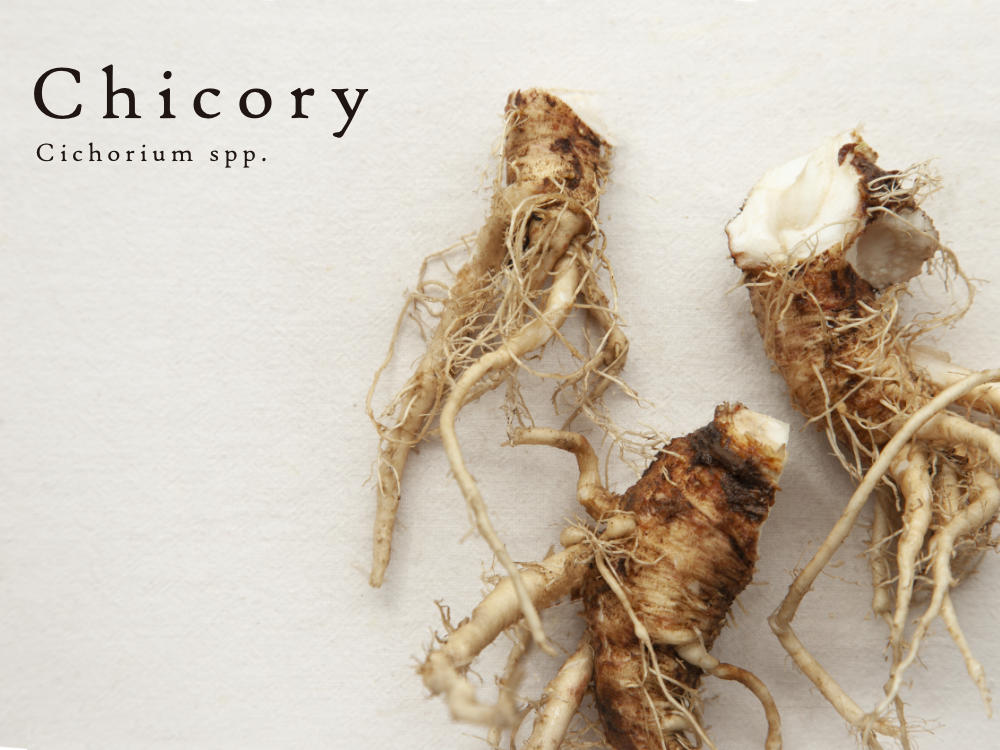
It's Autumn here and the Moon was is her waning phase, which means it is the ideal time to be harvesting root crops. So last week I dug up my chicory.
Chicory appears in many different forms; endive and radicchio are two of the more well known ones. The young leaves of all chicory varieties make a nice addition to salads. But the older leaves get very bitter so they aren't typically left to live long in a veggie garden. I do like bitter greens but these eventually get too intense for my taste, and even the chickens turn their beaky noses up at them.
But I leave the some chicory plants in over summer, in some out of the way corners of the veggie patch. I let them flower for the pollinators, and to self seed for next time. I wait until autumn when the plants have grown really large with big chunky roots. Then I thank them for all that they have given and bid them farewell. I harvest the roots and leave the greens out as an offering for the wallabies, who do literally eat almost anything in our garden that isn't fenced in.
I take the roots, clean them, chop them, dry them and roast them in my rickety old cast iron pan. They then have a rich and nutty flavour which I mix with roasted dandelion roots and brew to make a tasty coffee substitute.
This elaborate process found its beginnings in 1769, when Frederick the Great of Prussia banned the import of coffee to protect the local economy. Unwilling to give up their morning ritual, enterprising Prussians turned to roasted chicory root as a stand-in. A few decades later, Napoleon's Continental Blockade cut off trade across much of Europe, once again severing the coffee supply and pushing the French to do the same. The habit took such deep root in France that it crossed the Atlantic with settlers to New Orleans, where chicory coffee remains a signature drink to this day.
But chicory has an even longer history of use in herbalism, dating back to ancient Egypt and Greece where the whole plant was used in various other preparations. Chicory was, and still is, used in herbal medicine to purify the blood, support the liver and as a diuretic. Its properties are very much like those of its cousin dandelion, and the two are often paired together in herbal coffee alternatives. Dandelion, however, is rarely added to coffee itself — that distinction belongs to chicory, which is a classic coffee additive in its own right. Chicory is also a good source of inulin, a prebiotic fibre that promotes the growth of beneficial gut bacteria, and is nowadays sold in supplement form for this reason. Not bad for a plant that usually gets composted.
So there you have it - The Humble Chicory - how, and why, it got into my morning coffee cup.
--------------------
The information in this article is shared for educational and historical interest only and does not constitute medical advice.