
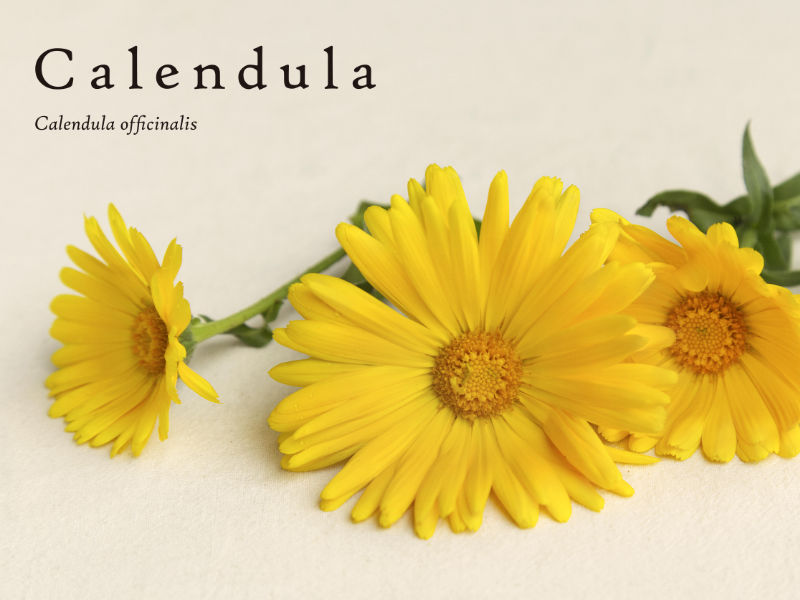
Calendula, often called pot marigold, has been a beloved garden plant for centuries. The name "pot marigold" comes from its use in the kitchen, where petals were routinely added to soups, stews and salads, earning it a place beside the hearth.
The name Calendula comes from the Latin calendae (the first day of each month), a nod to its near-continuous flowering habit. In our Tasmanian climate, it blooms almost year-round, its golden faces persisting throughout the cooler months when much of the garden has gone quiet.
Greek mythology tells of a young woman named Caltha who was so deeply in love with Apollo, god of the Sun, that she would rise each morning to watch the first light cross the sky. Consumed by her longing, she was eventually transformed into a flower that would forever track the Sun across the horizon.
Calendula is associated with the Sun in traditional astrological herbalism, stemming from its radiant appearance, its warm energetic qualities, and its habit of opening its petals at dawn and closing them at dusk. In traditional medical astrology, the Sun influences internal warmth, the cardiovascular system and the distribution of heat throughout the body. Calendula is classified as a warming herb, a traditional remedy for cold or stagnant conditions like poor peripheral circulation, slow-healing wounds and instances where the body's warmth and vitality need support.
The correspondence between calendula and the Sun goes beyond appearance. Solar remedies are traditionally considered warming, dispersing and vitalising — they thin stagnant fluids, raise the vital force and bring light to dark places. Calendula is sometimes described as "herbal sunshine" — a fitting name for a plant that not only warms the body but gently lifts the spirit. It has a long tradition of use for mild seasonal melancholy, particularly in climates where grey skies stretch on through the winter months. A quiet, steady remedy for those times when the inner light needs a little tending.
Calendula is the great soother. Its golden petals, made into salves and oils, are traditionally used to soothe and support the skin — from minor wounds and everyday dryness to irritated or sensitive skin. Which is why you'll find calendula in our Herbal Healing Balm, Boo Boo Balm and Calendula + Oatmeal Soap.
Calendula's reputation as a wound healer was put to one of its greatest tests during the American Civil War, where surgeons on both sides of the conflict used calendula petals to pack battlefield wounds. At a time when infection killed more soldiers than combat, it was one of the few reliable tools available. That same golden flower growing quietly in the garden had earned its place on the front lines of history.
While calendula is most commonly thought of as a topical remedy, its internal applications are equally valuable and often overlooked. Calendula is a gentle but valuable herb to support a stressed or sensitive digestive system. Just as it can soothe the outer skin, it is traditionally used to help soothe and calm the digestive system from within. In our modern world of digestive imbalances and sensitive systems, it is a humble but powerful ally.
Drunk as a tea, calendula has long been used to support digestive comfort. Taken as a tincture, it is traditionally used to support lymphatic flow. Bright as the Sun it tracks across the sky, healing with the same gentle persistence with which it blooms.
Calendula is not only medicinal but edible, making a beautiful addition to salads and baked goods, a tradition that stretches back to the ancient Greeks and Romans, who used the petals as a culinary garnish, and to the farmhouse kitchens of medieval Europe, where petals were routinely stirred into soups and stews through the winter months.
Calendula is easy and rewarding to grow, self-seeding readily if you let it. Beautiful, edible, medicinal and endlessly generous. If calendula isn't already in your garden, it is well worth finding a corner for a plant or two of these golden blooms.
HOW TO GROW CALENDULA
Soil and Position Calendula is unfussy about soil but prefers a well-drained position in full sun. It will tolerate partial shade but produces fewer flowers as a result. In our Tasmanian climate it performs beautifully through the cooler months, thriving in
conditions that send many other plants to sleep.
Sowing Direct sow seeds into the garden in autumn or spring. Simply press seeds lightly into the soil — they need light to germinate and should not be buried deeply. Germination is typically quick, within one to two weeks in mild conditions. Calendula can also be started in trays and transplante.
Care Once established, calendula requires very little attention. Water regularly until settled in, then allow the soil to dry slightly between waterings. Deadhead spent flowers regularly to encourage continuous blooming — the more you pick, the more it produces.
Self-Seeding One of calendula's most generous habits is its willingness to self-seed. Allow a few flowers to go fully to seed at the end of the season and it will return year after year with little intervention. Over time a small patch can become a permanent, self-sustaining feature of the garden.
Harvesting Harvest flower heads in the morning once fully open, when the resin content is at its highest. Dry them slowly on a rack in a warm, well-ventilated spot out of direct sunlight. Store in an airtight jar away from heat and light. Properly dried calendula will keep for twelve months.
Companion Planting Calendula is a valuable companion in the vegetable garden, though its pest relationship is worth understanding. It works primarily as a trap crop — attracting aphids and drawing them away from more desirable plants nearby. At the same time it lures beneficial insects such as ladybugs, hoverflies and lacewings, which feed on those same aphids and help keep pest populations naturally in check. Its roots also release compounds that deter nematodes in the soil. Plant it along the borders of your vegetable beds or between rows.
CALENDULA IN THE KITCHEN
Calendula petals are one of the simplest and most beautiful edible flowers you can grow. With a mild, slightly bitter and peppery flavour, they bring colour and a gentle herbal note to both sweet and savoury dishes. Fresh petals can be scattered over salads, stirred through rice or used as a garnish for soups and baked goods. Dried petals can be added to baked treats, herbal butters and infused into honey.
Here are two simple ways to bring calendula into your kitchen.
Calendula and Herb Salad
A simple, seasonal salad that lets the petals do the talking.
Ingredients:
A generous handful of mixed salad greens
A small handful of fresh calendula petals, pulled from the flower head
A few sprigs of fresh herbs — parsley, chives or mint work well
Olive oil
Apple cider vinegar or lemon juice
Salt and pepper to taste
Method:
Combine the salad greens and herbs in a bowl.
Dress lightly with olive oil and a splash of apple cider vinegar or lemon juice.
Season to taste.
Scatter calendula petals generously over the top just before serving. The petals will wilt quickly once dressed so add them at the last moment.
Calendula Honey Cake
A simple, rustic cake infused with the warmth of calendula — lovely with a cup of herbal tea on a cold afternoon.
Ingredients:1½ cups plain flour1 tsp baking powder½ tsp salt2 eggs½ cup honey½ cup milk⅓ cup melted butter or coconut oil3 tbsp dried calendula petals, plus extra for topping
Method: Preheat oven to 170°C. Grease and line a small loaf tin or round cake tin. Whisk together eggs, honey, milk and melted butter until combined. Fold in flour, baking powder, salt and calendula petals until just combined — do not overmix. Pour into prepared tin and scatter a few extra petals over the top. Bake for 30-35 minutes or until a skewer inserted in the centre comes out clean. Allow to cool before slicing.
Notes: Fresh petals can be substituted for dried — use a small handful. This cake keeps well for two to three days wrapped and stored at room temperature.
Only the petals are used in cooking — remove them from the green base of the flower head before use as the base can be bitter.
--------------------
The information in this article is shared for educational and historical interest only and does not constitute medical advice.