
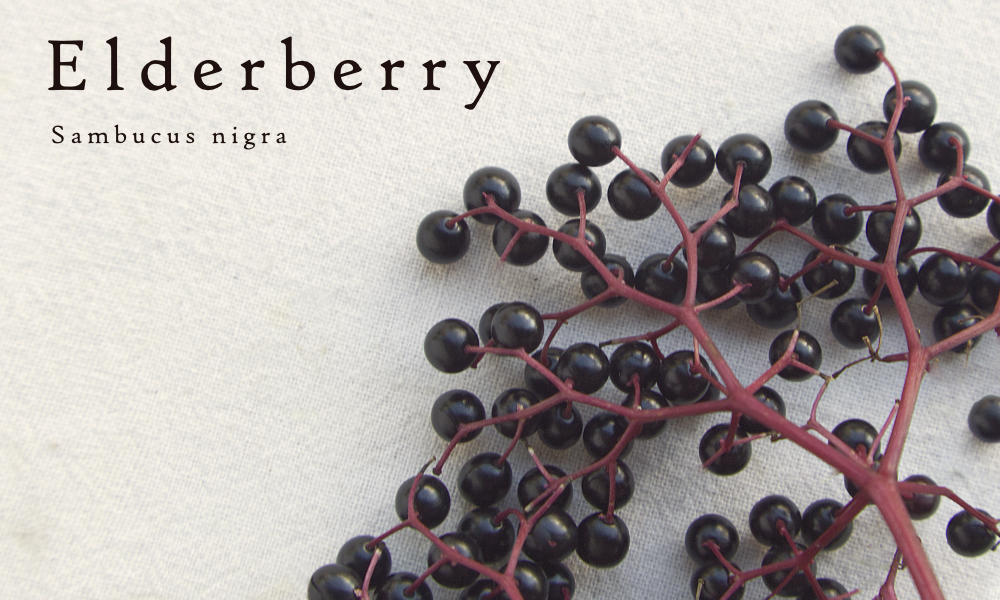
The elderberries are coming to their end, just as the air begins to cool.
They've been ripening slowly over the past month or so, and we've been gathering them in small batches — preserving some as syrups, and drying some for winter teas.
It's been a curious season here in Tasmania. Like much of what we've harvested, the elderberries felt a little out of rhythm. There was plenty on the branches, but the berries themselves were smaller than usual. Still, the harvest was there. We took what we needed and left the rest to share with the birds.
The botanical name Sambucus comes from the Greek word sambuke, meaning "a musical pipe," a reference to the hollow branches, which were once used to make wind instruments. The common name elder comes from the Anglo-Saxon word æld, meaning "fire," since blowing through the hollow stems of young branches helped fan flames alight. A tree of music and fire, and medicine.
Hippocrates called elder his "medicine chest" as far back as 400 BC. Renowned classical healers Theophrastus, Dioscorides and Galen also declared the elder and its purple berries among nature's greatest healing plants. And deservedly so.
Elderberries are deeply nourishing, rich in antioxidants and long valued for supporting the immune system, especially through the colder months. Their timing feels intentional, ripening in autumn, their medicine ready just as the cold and flu season begins.
Modern research has begun to catch up with what traditional herbalists have long known. Elderberries are rich in polyphenols, primarily anthocyanins, flavonols and phenolic acids, compounds with significant antioxidant properties. Research suggests that these antioxidants may help reduce inflammation and support overall immune system activity, helping protect immune cells from oxidative damage. A reminder that old knowledge and new are not always as far apart as we might assume.
Elder is an old-world tree, woven through with story and memory. A boundary keeper; she stands at the edges between sickness and health, life and death, this world and the unseen.
Across European folk traditions, elder was never just a plant, but a presence. It was often believed a spirit dwelled within the tree (sometimes called the Elder Mother) and it was said you should always ask permission before cutting her wood or taking her branches. To do otherwise was to risk misfortune.
In Denmark, it was believed that a dryad lived in the elder tree and watched over it. She was known as the Hylde-Moer, or Elder-tree Mother, and if anyone cut down her tree she would follow the wood and haunt the owners of whatever was made from it. In some places it was not only discouraged but actually legally forbidden to cut the tree down. The ritual of asking permission before taking from the elder was, in this light, not mere superstition. It was law, custom and deeply held belief woven together.
Elder was planted close to homes for protection, thought to ward off illness, lightning and ill intent. Her blossoms and berries were gathered for medicine, but with quiet respect, part remedy, part ritual.
In many traditions, elder marked thresholds. She stood at gateways, near doorways, along boundaries of land, in places where one thing becomes another. The elder came to symbolise transition itself: between seasons, between states of being, between the physical and the unseen.
A tree that reminds us to be conscious of what we take and grateful for what we receive.
How to Grow Elder
Elder is a generous and relatively undemanding plant, well suited to the home garden and particularly happy in the cooler, wetter climates of southern Tasmania.
It grows as a large deciduous shrub or small tree, reaching three to five metres in height, and can establish quickly once settled in. It prefers a moist, well-drained position in full sun to partial shade and will tolerate a range of soil types, though it does best in rich, fertile ground. A sheltered spot away from harsh winds will encourage a stronger, more productive plant.
Elder can be grown from seed, but the most reliable method for home gardeners is to strike cuttings in late autumn or winter while the plant is dormant. Take hardwood cuttings of around 20–25cm, push them into a pot of well-draining soil and keep moist until roots establish. Transplant into the garden the following spring.
Once established, elder is vigorous and rewards a hard annual prune in late winter to encourage fresh productive growth. Left unpruned it can become straggly, so a good cut back each year keeps the plant healthy, shapely and productive.
In Tasmania, elderflowers appear in late spring and the berries follow through summer into early autumn. Both are worth harvesting — the flowers for cordials and fritters, the berries for syrups, teas and tinctures.
A word of caution: all parts of the raw elder plant contain compounds that can cause nausea if consumed in large quantities. Berries must be cooked or prepared before use. The flowers can be used fresh or dried.
How to Forage Elder
Elder grows widely across Tasmania and the cooler regions of south-eastern Australia, often found along roadsides, creek banks, forest edges and disturbed ground. It is one of the easier plants to identify once you know it, but as with all foraging, a confident identification is essential before harvesting anything.
What to look for:
In flower (late spring), elder is hard to miss. Large flat-topped clusters of small creamy white flowers with a distinctive sweet, slightly musky fragrance. The leaves are pinnate, with five to seven toothed leaflets arranged in pairs along a central stem.
In berry (late summer to autumn), the clusters droop under the weight of small, deep purple-black berries. Ripe berries are soft and deeply coloured. Unripe green or red berries should not be consumed.
The bark is light grey and corky, with prominent lenticels. Older stems are woody with a pithy centre — the hollow branches that gave elder its musical history.
What to avoid:
Elder can be confused with several other plants, most notably dwarf elder (Sambucus ebulus), which is toxic and grows lower to the ground, and elderflower can occasionally be confused with hemlock (Conium maculatum), which is highly poisonous. Hemlock has purple-spotted hollow stems and an unpleasant smell when crushed. If in doubt, do not harvest.
Harvesting etiquette:
Take only what you need. Leave plenty for wildlife, particularly the birds who rely on the berries through autumn. And in the spirit of the old tradition — it doesn't hurt to ask permission before you take.
In The Kitchen - Elderberry Syrup
A simple, traditional remedy for the cold and flu season. Made with raw honey added at the end to preserve its beneficial properties, this syrup keeps well through winter and can be taken daily as a preventative or at the onset of illness.
Ingredients:
2 cups fresh or 1 cup dried elderberries (stems and leaves removed)
3 cups water
1 cinnamon stick
4 whole cloves
1 tsp freshly grated ginger
1 cup raw honey
Method:
Combine the elderberries, water, cinnamon, cloves and ginger in a saucepan. Bring to the boil, then reduce to a low simmer. Cook uncovered for 40–45 minutes, stirring occasionally, until the liquid has reduced by roughly half.
Remove from heat. Mash the berries gently with the back of a spoon, then strain through a fine mesh sieve or piece of muslin cloth, pressing well to extract as much liquid as possible. Discard the spent berries and whole spices.
Allow to cool until just warm — not hot. This step is important, as honey added to hot liquid will destroy its beneficial enzymes and raw properties. Once the liquid has cooled to a comfortable warmth (below 40°C), stir through the raw honey until fully combined. Taste and adjust — you can add a little more honey if you prefer a sweeter syrup.
Pour into sterilised glass jars or bottles and store in the refrigerator.
Notes: This syrup will keep for two to three months refrigerated. For a longer shelf life, add a small amount of brandy or apple cider vinegar as a natural preservative. A standard dose is one tablespoon daily for adults, one teaspoon for children. Not suitable for children under twelve months.
--------------------
The information in this article is shared for educational and historical interest only and does not constitute medical advice.